

If you’ve ever been in the market for industrial machining equipment, you know how tricky it can be to pin down a price for something as complex as a CNC boring milling machine. As a supplier who’s worked directly with shops, fabricators, and OEMs for over a decade, I get it—you don’t just want a random number. You want a breakdown that makes sense, because this isn’t a small purchase; it’s a long-term investment that’ll shape your production, your downtime, and your bottom line. Let’s cut through the noise and talk about what actually impacts the cost of these machines, no fluff, no hidden jargon.
First off, let’s clarify what a CNC boring milling machine is, because a lot of people mix it up with other vertical machining centers (VMCs). A standard VMC, like our top-rated VMC CNC Vertical Machining Center, is great for general milling, drilling, and tapping—think small to medium parts, prototype work, or low-volume runs. But a CNC boring milling machine is built for bigger, heavier, more precision-demanding jobs: boring large holes in engine blocks, milling massive structural components for construction, or machining parts that need ultra-stability at high loads. That extra robustness doesn’t come cheap, but it’s non-negotiable for shops that handle heavy-duty work.
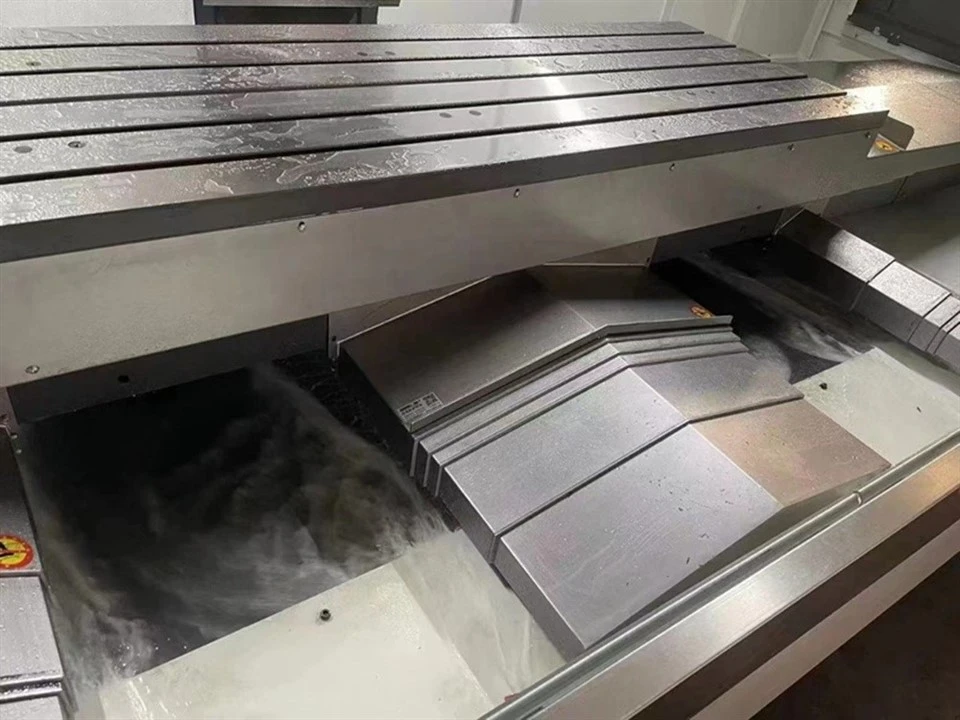
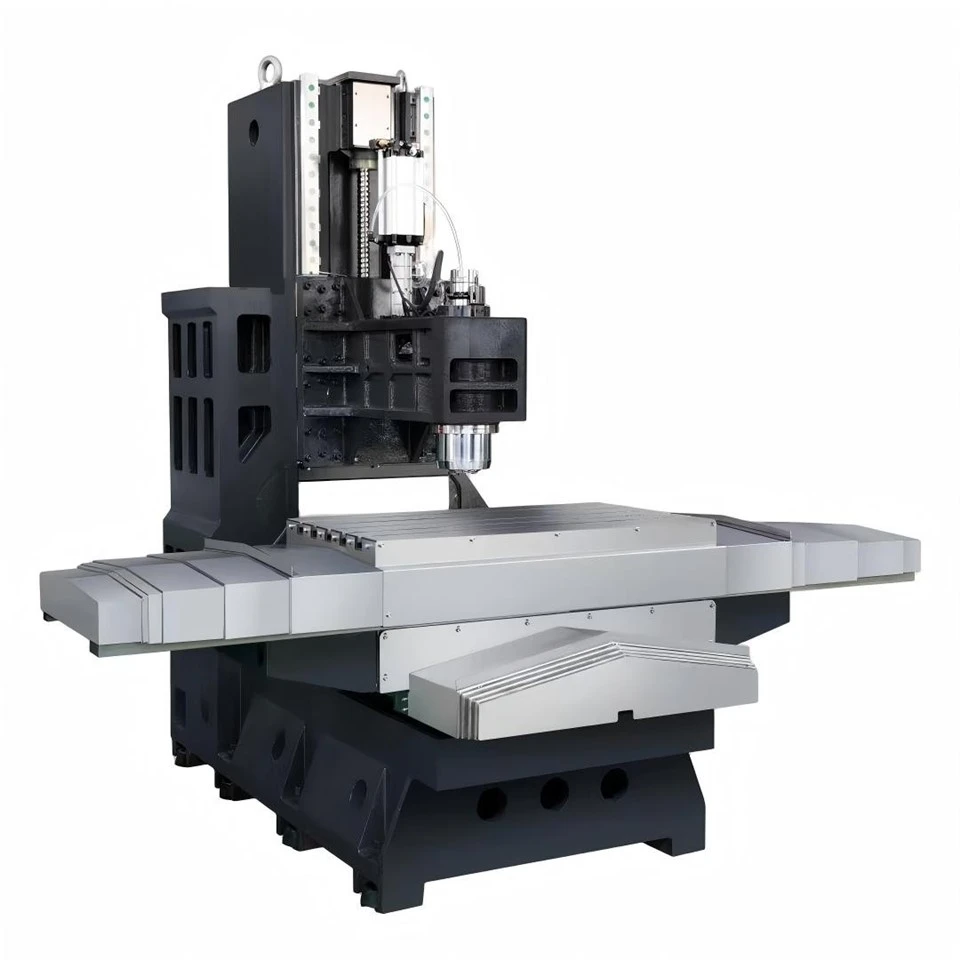
So, what drives the price? Let’s start with the core components—they’re the backbone of any CNC machining machine, and they’re where most of the cost difference happens. The spindle, for example, is the heart of the machine. A high-torque spindle for heavy boring and milling (the kind you’d need for 50+ mm diameter holes or thick steel plates) costs way more than a standard low-torque spindle for light work. Then there’s the frame: a cast iron base is non-negotiable for vibration dampening, which is critical for precision boring. Cheaper machines might use steel weldments, but they flex, leading to inconsistent part quality—something that’ll cost you in rework later, even if the upfront price is lower.
Next, there’s the linear motion system. Our Linear Way Milling Center, for example, uses precision linear rails instead of ball screws for faster, smoother movement—ideal for milling long runs of parts. Wait, but a CNC boring milling machine might use either linear rails or box ways, depending on its design. Box ways are stiffer and better for heavy loads, so they’re standard on high-end boring mills, but they also cost more to manufacture than linear rails. If a supplier tries to pass off a linear rail system as a box way, that’s a red flag for cheap construction that’ll struggle with heavy-duty work.
Then there’s the control system. Most modern CNC boring mills use Siemens or FANUC controls, which are industry-standard for reliability and advanced functionality like tool monitoring, automatic compensation for thermal expansion, and program optimization. Cheaper, off-brand controls might save you a few thousand dollars upfront, but they’re more prone to glitches, have limited support, and won’t integrate with your shop’s existing ERP software. For a busy production floor, downtime from a bad control system can add up to tens of thousands in lost revenue, so paying for a trusted control is worth it.
Now, let’s talk about the range of prices. From what we’ve seen working with customers, entry-level CNC boring milling machines (designed for small to mid-sized shops that do occasional heavy work) start around $50,000–$80,000. These are usually 3-axis machines, with cast iron frames, mid-tier torque spindles, and solid entry-level controls. They’re great for shops that don’t run 24/7 but need something more robust than a standard VMC. For example, if you’re a job shop that takes on the odd structural steel part, an entry-level boring mill would fit that.
Mid-range models, which are the sweet spot for most medium to large fabrication shops, cost between $80,000 and $150,000. These often add 4-axis capability (rotary tables for round parts), higher torque spindles (capable of handling 100+ mm holes), and better linear motion systems—like the ones in our Linear Way Milling Center, which cuts down on cycle times by 20% compared to entry-level models. They also come with better tool changers (automatic, larger capacity) and upgraded controls that make operation easier for your machinists. If you’re running high-volume production of heavy parts, this range is where you’ll get the most value—you’re not paying for overkill, but you’re getting reliability and speed that’ll pay for itself in a year or two.
High-end CNC boring milling machines, used for heavy industrial work like aerospace components, large engine blocks, or mold making, can run $150,000 and up—some specialty models even hit $300,000. These have 5-axis capability, ultra-high torque spindles (often with through-tool coolant for deep boring), massive work tables (capable of holding 10,000+ kg parts), and advanced controls with predictive maintenance features. They’re built for 24/7 operation, so downtime is practically non-existent. For large OEMs or specialty job shops that handle high-stakes parts, this is a necessary investment, but it’s way more than most small shops need.
Wait, but there’s a catch: price isn’t everything. A lot of new buyers look at the cheapest machine and jump, only to regret it later. Let’s break down hidden costs that people miss. First, installation and setup. CNC machines require a level foundation, power supply upgrades, and sometimes environmental controls (like temperature regulation for precision). A $50,000 machine might end up costing $10,000 extra just to install, depending on your shop’s layout. Then there’s training: if your machinists are used to older, simpler machines, you’ll need to send them to training, which costs time and money. Cheaper machines often have limited or no training included, while mid and high-range models usually offer hands-on support.
Parts and service are another big one. If you buy a machine from a supplier with a bad reputation, replacement parts could take weeks to arrive, and service techs might not know how to fix it. At our company, we stock common parts for all our machines (including those in our CNC Metal Milling Machine line and boring mills) and offer 24/7 tech support, which means less downtime for your shop. On the flip side, a super cheap machine might use non-standard parts, so when something breaks, you’re stuck waiting for a custom order—costing you days of production.
Also, consider what else you might need. A lot of shops mix up boring mills with other machines, but if you’re also doing a lot of tapping or light drilling, you might pair your boring mill with a High Speed Tapping Center, which handles those fast, precise light jobs. Or if you’re working on very small, high-precision parts, a High Speed Drilling Tapping Machining Center would be a better fit than a large boring mill. So your total cost isn’t just the boring mill—you might need to factor in other machines depending on your workflow.
Let’s talk about real customer examples, to make this concrete. Last year, a small job shop in Michigan came to us asking about pricing for a CNC boring milling machine. They were running 3 VMCs (including a VMC CNC Vertical Machining Center) but had a client who needed large structural brackets for bridges, which their old VMCs couldn’t handle. They initially looked at a cheap entry-level machine online for $45,000, but when we explained that it had a steel weldment frame and a low-torque spindle, we showed them that their rework rate on heavy parts would jump to 15%, costing them more in materials than the price difference. They ended up going with our mid-range 3-axis boring mill for $95,000, and their rework rate dropped to 2%—they paid back the extra $50,000 in less than 18 months.
Another example: a large aerospace OEM we work with needed a 5-axis boring mill for wing components. They initially quoted a $220,000 high-end model, but we worked with their engineers to customize it—they didn’t need the extra 10,000 kg table capacity, so we dropped it to $180,000. They saved $40,000 without sacrificing the precision or torque they needed, because we tailored the machine to their exact workload instead of selling them a one-size-fits-all model. That’s something a lot of suppliers don’t do—they push the most expensive machine, but a good supplier will help you find what you actually need.
Wait, let’s address a common question: are used machines cheaper? Yeah, but they come with their own risks. A used CNC boring mill might cost $20,000–$50,000, but you don’t know the machine’s history—has it been run 24/7 for 10 years with no maintenance? Is the spindle worn out? Replacement parts for a 15-year-old boring mill might be hard to find, and you could end up spending more on repairs in the first year than you saved upfront. We’ve seen customers buy a $30,000 used machine and spend $15,000 on repairs 6 months later, which would have been avoided with a new mid-range machine.
So, how do you figure out what’s right for you? Start by asking yourself: what’s the heaviest, largest part I’ll be machining? How often will I run it—once a month, or 24/7? Do I need 3-axis, 4-axis, or 5-axis capability? Can my shop handle the installation and power requirements? If you’re a small shop with occasional heavy jobs, an entry-level machine is fine. If you’re a mid-sized shop running 8-hour shifts 5 days a week, go mid-range. If you’re a large shop with 24/7 production, high-end is worth it.
At the end of the day, a CNC boring milling machine is an investment, not a purchase. The cheapest option isn’t always the best, and the most expensive one might be overkill. If you’re ready to talk through your specific needs, we can walk you through our range of machines—including our Linear Way Milling Center, High Speed Tapping Center, and the rest of our vertical machining lineup—to find exactly what fits your budget and your production goals. Don’t waste time guessing; reach out to our team to start your conversation today.
References
- Industrial Machinery Manufacturers Association. (2023). "Cost Analysis of CNC Machining Equipment for Fabrication Shops." Industry Report.
- Global CNC Technology Standards. (2022). "Linear Motion Systems and Their Impact on Machining Precision." Technical Journal.
- Fabricators & Manufacturers Association. (2024). "Return on Investment for Industrial Machining Equipment." Small Business Guide.
- Machining Magazine. (2023). "Hidden Costs of Used vs. New CNC Boring Milling Machines." Industry Insights.
- National Institute of Standards and Technology. (2022). "Control Systems Reliability for Industrial Machining Operations." Technical Note.